Categories
business Business Case Studies Business Courses Business motivation Business Startup Ideas Finance Marketing Motivational MSME News Sales share market Small Business Consulting Firms Startup Strategy

  How to use WhatsApp Catalog to sell products?

The growing technology has made the current time a digital era. The access to the internet has made online shopping a common and more preferred activity. Everyone wants to shop from home; saving time and energy. To adapt to the new lifestyle, businesses need to go online. WhatsApp which was earlier used for chatting is now a powerful tool. WhatsApp Business allows you to carry your business in your pocket. It has features like WhatsApp Catalog which can help you sell products to the customers.

 WHAT IS WHATSAPP CATALOG ?

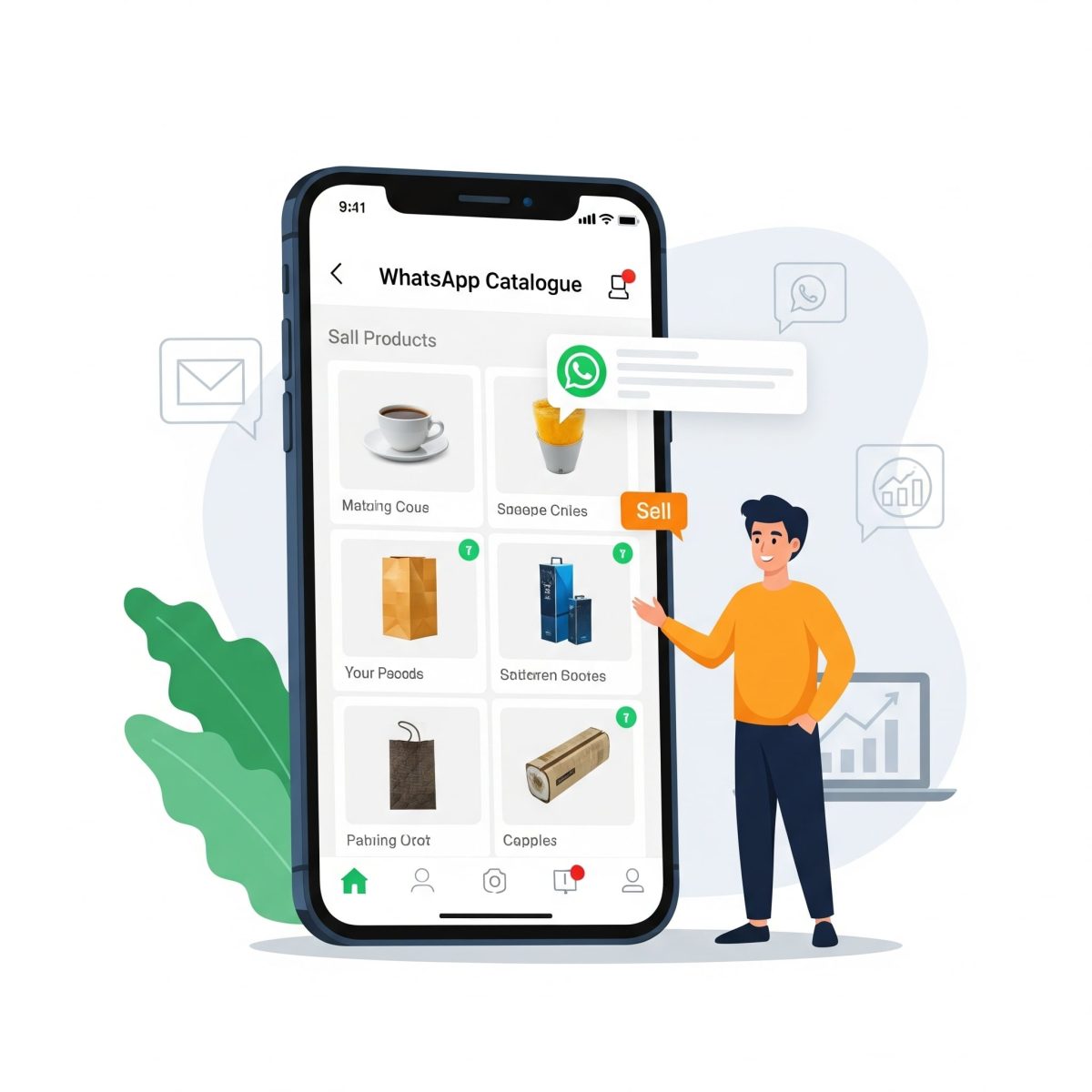
WhatsApp catalog is like a digital shop, which you can make using WhatsApp business app. It allows you to add pictures, prices and other details about your product. For example- if you are planning to sell handmade Rakhis, you can use the feature and add the pictures, names, prices and other details about it. You can then share the product links with your customers.

You May Also Read:

E-Commerce vs Reselling vs Wholesale – Which One is Right for You?

HOW TO MAKE WHATSAPP CATALOG ?

For making WhatsApp Catalog, you need to download the WhatsApp Business App available on play store and app store. After downloading, one has to login using their business number and set up the profile. While setting up the profile, you have to add business name, photo, category, address and website if available.

In order to make a catalog, click on “More Options” and select “Business Tools”. Tap on “catalog “and click on ‘Add New Item’. Therein add the information like product name, category, prices, photos, link or product code and other details. Save this information and your product is now registered on WhatsApp catalog.

You may also read:

How to Increase Sales with Low-Cost Marketing Ideas

HOW TO SELL PRODUCTS USING WHATSAPP CATALOG ?

After saving your product, the next step is to sell it. You can sell your product by sending its link or code to customers through chat, in this way the customer can easily get all the information about the product. Ask your customer to send these to their friends as well. Set up auto-send messages or quick replies so that the customer can easily order the product. Set up a team to reply to people and track the orders.

Use other features of WhatsApp like status and broadcast for promotions. Put your product on status everyday. Upload its photos, videos etc daily. Make a broadcast list and add customers on it. Take consent before adding the customer and then send them daily updates etc. Use groups to keep customers as a community. Add your loyal customers in the group and send them details about new products etc.

You May Also Read:

Zero Dollar Marketing Strategies to Attain More Customers

 TIPS TO USE WHATSAPP CATALOG EFFICIENTLY

  1. Customers want to see the product clearly before buying and therefore you should always upload clear and attractive photographs.
  2. Customers like to ask very specific questions about the products and need clear answers. If their questions would be answered in the description, they would not be hesitant to buy the product. And hence you should always write short and simple descriptions.
  3. We as business persons always look out for profit and similarly customers also like to do so. To entice your customers, you should give them discounts and rewards. Ping them about offers and discounts.
  4. Customers have a low patience level and will go to other business profiles to buy the product if they aren’t answered on time therefore try to reply quickly so that the customer gets impressed. 

As the head of business, one needs to do a lot of things. Replying to customers becomes difficult while working and hence you should set ‘auto-reply’ messages.

You May Also Read:

Reasons To Hire A Marketing Agency That Will Help Your Business Reach Its True Potential

BENEFITS OF USING WHATSAPP BUSINESS

  1. WhatsApp Business is a free and easy to use app. One doesn’t need to have grave technological knowledge for using it. Anyone with a smartphone can use it and get the benefits.
  2. The feature of the catalog helps you give a smart presentation of the product. Customers get details about the product in just one click, which is time-saving for them.
  3. This app also helps in instant marketing as everybody has a smartphone and would check statuses and messages. You can post your product link on status and various groups and chats.
  4. WhatsApp is predominantly a chatting app, and thus this enables the customers to have direct conversation and clear their doubts.
  5. This allows people to see the product clearly, get detailed information in one click and have instant replies to queries, which makes chances of returns very low.

 CONCLUSION

WhatsApp Business is a great push for small businesses. It is a free tool which helps in branding, marketing, chatting and above all selling your product. This neither requires some technical knowledge nor any investment. This is a daily use app which can help you sell your products professionally. This only requires a smartphone and time, and you are good to go.

If you’re also struggling with low sales in your business, this article can be extremely helpful for you. Moreover, if you’re facing any kind of challenge in your business and are looking for expert guidance, click on the link to the Leadership Funnel Program and get in touch with us now.

If you’re also struggling with low sales in your business, this article can be extremely helpful for you. Moreover, if you’re facing any kind of challenge in your business and are looking for expert guidance, click on the link to the Leadership Funnel Program and get in touch with us now.

Categories
business Business Case Studies Business Courses Business motivation Business Startup Ideas E-Commerce Finance IPO Leadership Building Marketing Motivational MSME News Sales share market Small Business Consulting Firms Startup Strategy

E-Commerce vs Reselling vs Wholesale – Which One is Right for You? 

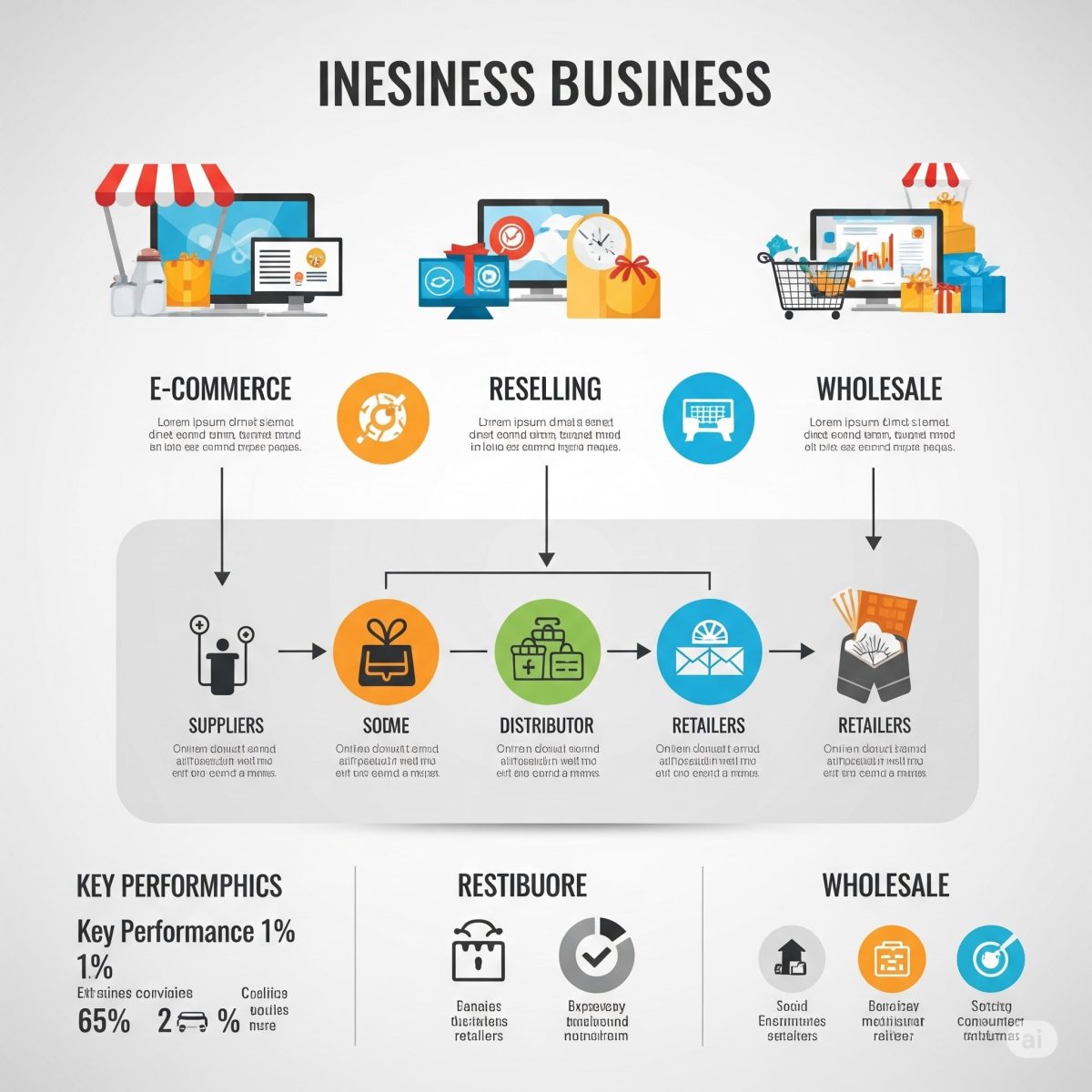
In today’s digital age, starting your own business has never been easier. Whether you’re a student, a homemaker, or someone looking to leave the 9 5 hustle, you’ve probably heard terms like e-commerce, reselling, and wholesale. But what do they actually mean? And which one is best for you? Let’s break it all down so you can choose the path that suits your goals, resources, and lifestyle. 

E-COMMERCE 

E-commerce is the practice of selling products online, either through your own website or platforms like Amazon, Flipkart, or Shopsy. You can sell your own products or source them from suppliers. It has many advantages like having full control over branding and customer experience, enjoying high profit margins with right marketing and the power to build a long term loyal customer base.

You May Also Read:

Haldirams From Bhujia to Billion-Dollar Buzz

In e-commerce you have the opportunity to automate business operations. Requiring upfront investments, involving customer service, returns and logistics and learning digital marketing tools and strategies are some of the cons of e-commerce. It is best for entrepreneurs with a vision for brand building, persons who can spend money, time and efforts and people looking for long term business growth.

 RESELLING

 Reselling means selling products manufactured or stocked by someone else, usually via platforms like Meesho, Shop101, or GlowRoad. You don’t hold stock or worry about packaging and delivery, these are handled by the app. In reselling, one doesn’t need to invest money on inventory. It is easy to start with just a smartphone. It is perfect for part time with zero risk if done properly.

You May Also Read:

Creative Businesses: 5 Viable & Budget-Friendly Start-Up Ideas for People With Creative Mind

In this business, one needs to understand that there is a very low profit margin per product, one doesn’t have control over shipping and quality and it is hard to build a personal brand and loyal customer base. It is best suited for students, homemakers, or beginners. It is a good stepping stone for anyone looking for side hustle without investments and people who want to test the waters before going big.

WHOLESALE

Wholesale means buying products in bulk directly from manufacturers and selling them in bulk to retailers, shopkeepers, or other resellers. It’s a business-to-business (B2B) model that requires capital, space, and contacts. Here, high volume sales mean bigger profit per transaction. One involved in this business doesn’t need to deal with individual customers. This is great for repeat bulk orders if you offer quality.

This requires a lot of investments, has the risk of unsold stock if demand drops, needs proper storage, delivery logistics and connections in the market to find buyers. This is best for traders, distributors, or those with experience in supply chain. People who already have warehouse space and capital get the advantage and people interested in B2B business rather than retail should go for it.

You May Also Read:

Who Are You – Entrepreneur Or Employee? Let Us Help You Find Out

CONCLUSION

In the world of online business, there are many paths to success but choosing the right one depends on your resources, skills, and vision. If you’re just starting out and want a risk-free entry, reselling is a great way to learn and earn.

If you’re ready to invest time, money, and energy into building a brand of your own, e-commerce offers long-term potential. And if you already have market connections and capital, wholesale can bring you big profits through bulk trading.

If you’re also struggling with low sales in your business, this article can be extremely helpful for you. Moreover, if you’re facing any kind of challenge in your business and are looking for expert guidance, click on the link to the Leadership Funnel Program and get in touch with us now.
Categories
Bounce Back business Business Case Studies Business Startup Ideas Leadership Building Leadership Funnel Marketing Motivation & Mind Control Motivational MSME News Powerful Personalities Process & Business Expansion Sales Startup Strategy Student

Vijay Shekhar Sharma: The Hindi-Medium Boy Who Made India Digital

Vijay Shekhar Sharma is the founder of Paytm and the face of India’s digital revolution. His journey is not just about building a company, but about breaking all limits—of language, money, and fear—to teach India how to pay through mobile.

Early Life and Education

Vijay Shekhar Sharma was born on July 8, 1978, in a small village in Aligarh, Uttar Pradesh. His father was a school teacher and his mother a homemaker. He studied in a Hindi-medium government school, where even understanding English was difficult. But inside him, there was a fire to do something big.

When he joined Delhi College of Engineering (now DTU) for higher studies, English became his biggest challenge. He couldn’t understand lectures or textbooks properly. But instead of giving up, he started learning English by himself—reading newspapers, listening to songs, and practicing every day until he gained confidence.

First Startup and Early Struggles

During college, Vijay fell in love with technology. In 1997, he launched a company called XS Corps that built websites. Along with a few friends, he also created a content management system similar to what WordPress is today.

He didn’t have a laptop or money. He worked from cyber cafes, coding late into the night. There were times when he didn’t even have enough money for food, but he never complained. He had a dream and believed in it with all his heart.

Start of Paytm

In 2000, Vijay started One97 Communications, which later became the parent company of Paytm. It offered value-added mobile services like caller tunes and alerts. But the real revolution came in 2010 when he launched Paytm—short for “Pay Through Mobile.”

At first, Paytm was only for mobile recharges and bill payments. But Vijay had a bigger dream—he wanted people to use mobile for everything, from buying tea to booking flight tickets. So he launched the Paytm Wallet, and soon, shops, autos, and businesses across India started accepting Paytm.

The Rise to Success

Paytm’s biggest growth came in 2016 during demonetization. With cash suddenly out of reach, India turned to digital payments—and Paytm was ready. In that one year, millions of new users joined Paytm and the company’s value grew rapidly.

In 2017, Paytm launched its own bank—Paytm Payments Bank. It then added services like Paytm Mall and Paytm Money. In 2021, the company went public with India’s largest IPO.

Challenges and Criticism

As the company grew, so did the problems. The IPO did not perform well in the stock market, and the company had to face financial losses and declining user trust.

Vijay also faced personal attacks and was even seen crying during a press conference. But he didn’t give up. He revised his strategies, strengthened his team, and worked hard to keep Paytmon top.

Paytm’s Present and Future

Today, Paytm is not just a wallet. It is a full digital ecosystem that offers payments, banking, investment, shopping, and more—all on one app. Vijay’s dream is to make India truly cashless, and Paytm is playing a big part in that journey.

                             Paytm’s Growth (2010–2024)

This graph clearly shows how Paytm’s user base grew rapidly between 2010 and 2024. From just 50 lakh users in 2010 to over 10 crore in 2024, the growth is nothing short of incredible. Demonetization acted as a major turning point, pushing the platform into every corner of the country.

Vijay Shekhar Sharma’s story is proof that dreams don’t need perfect English or a rich background—just courage and belief. He broke through language barriers, survived financial struggles, and built one of India’s most trusted tech brands. Today, he represents the face of India’s digital future.

At Bada Business, we believe in such stories of courage and transformation. We proudly support small businesses and new entrepreneurs, because together, we can make the Indian economy stronger.


Categories
business Business Case Studies Business Courses Business Startup Ideas Education IPO Motivation & Mind Control MSME Powerful Personalities Process & Business Expansion Sales share market Startup Strategy

From a Small Town Boy to the Billionaire Founder of OYO Rooms

Ritesh Agarwal is one of the youngest and most successful entrepreneurs in India. He is the founder of OYO Rooms, a global hospitality company that changed the way people stay while traveling. He started his business journey at the age of 19 and built a billion-dollar company. His story is full of passion, hard work, and belief in his dream.

Early Life and Family

Ritesh Agarwal was born on 16th November 1993 in a small town called Bissamcuttack in Odisha. He belonged to a middle-class family and grew up in a simple environment. From a young age, he was very interested in technology and business. He loved to explore, read books, and understand how things work. After finishing school, he moved to Delhi for college. He got admission into the Indian School of Business and Finance, but he soon realized that he wanted to start something on his own. So, he dropped out and decided to follow his dream of building a business.

Early Struggles

Ritesh always wanted to do something different. When he was just 18 years old, he started traveling across India on a very small budget. He stayed in many cheap hotels and faced many problems like dirty rooms, poor service, and no proper facilities. These problems gave him an idea. He thought—why not create a company that helps people find better budget hotels?

With this idea, he launched a startup called Oravel Stays. It was similar to Airbnb and helped people book affordable homestays online. But after some time, he realized that just listing hotels online was not enough. The real problem was the bad quality of hotels. So, he changed his business model and started working on something bigger.

Start of OYO

In 2013, Ritesh launched OYO Rooms, which means “On Your Own.” His goal was to help budget hotels improve their quality and service. He partnered with small hotel owners, trained their staff, improved their rooms, and gave them technology and branding support. In return, these hotels became part of the OYO network, and customers could book them online easily.

The special thing about OYO was that it offered clean and reliable rooms at low prices. Customers started trusting the brand. Slowly, more hotel owners joined OYO, and the company began to grow.

First Big Success

OYO received its first investment from VentureNursery and later from Lightspeed Venture Partners. But the biggest success came when SoftBank invested in OYO. After that, OYO started growing very fast. In 2015, OYO had more than 10,000 rooms in over 100 cities in India.

Then, the company started expanding into other countries like China, Malaysia, and Nepal. By 2018, OYO’s value became more than 1 billion dollars, and it became one of the fastest-growing startups in India. In 2019, OYO entered the US and Europe and added thousands of new hotels around the world.

Challenges and Failures

Like every successful entrepreneur, Ritesh also faced many challenges. In 2020, during the COVID-19 pandemic, the hotel industry was badly affected. Travel stopped and bookings were cancelled. OYO faced big financial losses and had to lay off many employees. People started questioning the company’s future.

There were also legal problems in some countries because of different business rules. As the company grew fast, managing everything became difficult. But Ritesh never gave up. He kept working hard and made changes in the company to bring it back on track.

OYO’s Present and Future

Today, OYO is running in more than 80 countries with over 100,000 hotels and homestays on its platform. The company is using new technologies and business ideas to give better service to its customers.

Some of the latest innovations by OYO include OYO Wizard, which is a loyalty program that gives special deals to repeat customers. OYO has also started OYO Workspaces for office needs and OYO Townhouse for premium budget stays.

                        OYO’s Growth (2015–2024) 

This graph clearly shows how OYO Rooms grew rapidly from 2015 to 2024. From just 1,000 hotels in 2015, OYO expanded to over 100,000 hotels worldwide by 2024. It’s a strong example of what consistent vision and hard work can achieve.


The story of Ritesh Agarwal proves that anyone can achieve big dreams with passion, courage, and never giving up. He started from a small town with limited resources, but he believed in his idea and worked day and night to build it. Even during hard times like the pandemic, he stayed strong and continued improving his company.

At Bada Business, we also believe in supporting such hardworking entrepreneurs. We proudly support small companies and new startups, because we believe they are the future of India. Our goal is to make the Indian economy stronger by helping more people like Ritesh succeed.


Categories
business Business Case Studies Business Startup Ideas Leadership Building Motivation & Mind Control Startup Strategy Technology

AI-Powered Growth: How Small Indian Businesses Are Winning Big in 2025

AI-Powered Growth: How Small Indian Businesses Are Winning Big in 2025

AI: The Ultimate Game Changer for Small Businesses in India

Artificial Intelligence (AI) is no longer just a buzzword—it has become a powerful tool for small and growing businesses in India. In 2025, with the small business sector contributing over 30% to India’s GDP and employing millions, AI is revolutionizing the way entrepreneurs operate by providing affordable, scalable, and practical solutions. Let’s explore how AI is helping small businesses achieve success.

Automation for Efficiency

Repetitive tasks like inventory management, customer support, and accounting can be time-consuming and tedious. AI simplifies these processes, allowing business owners to focus on growth. Imagine an AI chatbot handling customer inquiries 24/7 for a small retailer in Mumbai or a handicraft seller in Jaipur. With AI, businesses no longer miss out on sales, even when they’re offline. These tools are cost-effective, easy to integrate, and ideal for businesses with limited resources.

Smart Decision-Making with Data

Market research can be expensive, but AI helps small businesses analyze customer preferences, buying patterns, and local trends using data from social media or sales records. For example, a Delhi street food vendor could predict the most popular items for weekends, reducing waste and maximizing profits. AI eliminates guesswork and enables businesses to make data-driven decisions with confidence.

Affordable and Targeted Marketing

Effective marketing is crucial for growth, but not all businesses can afford large campaigns. AI-driven advertising platforms allow small businesses to target the right audience at a lower cost. A rural artisan, for instance, can sell handmade products on Instagram or Amazon and reach customers across India or even globally—without needing a professional marketing team. AI-powered marketing tools help businesses expand their reach and visibility effortlessly.

Enhancing Customer Experience

AI also plays a key role in improving the customer experience. Personalized recommendations based on previous purchases can significantly boost customer satisfaction and loyalty. Imagine a clothing store in Bangalore suggesting outfits to customers based on their shopping history. By offering a tailored shopping experience, businesses can build strong relationships with their customers and encourage repeat purchases.

The Future of Small Businesses

From automation to smart insights, AI is transforming how small businesses operate. It is not just a technological advancement—it is the future of business growth. By embracing AI, small businesses in India can enhance efficiency, increase profits, and stay ahead in an increasingly competitive market.

Book your free business consulting

Categories
Bounce Back Business Courses business idea for summer Business Startup Ideas Education Marketing Motivation & Mind Control News Sales Startup Strategy

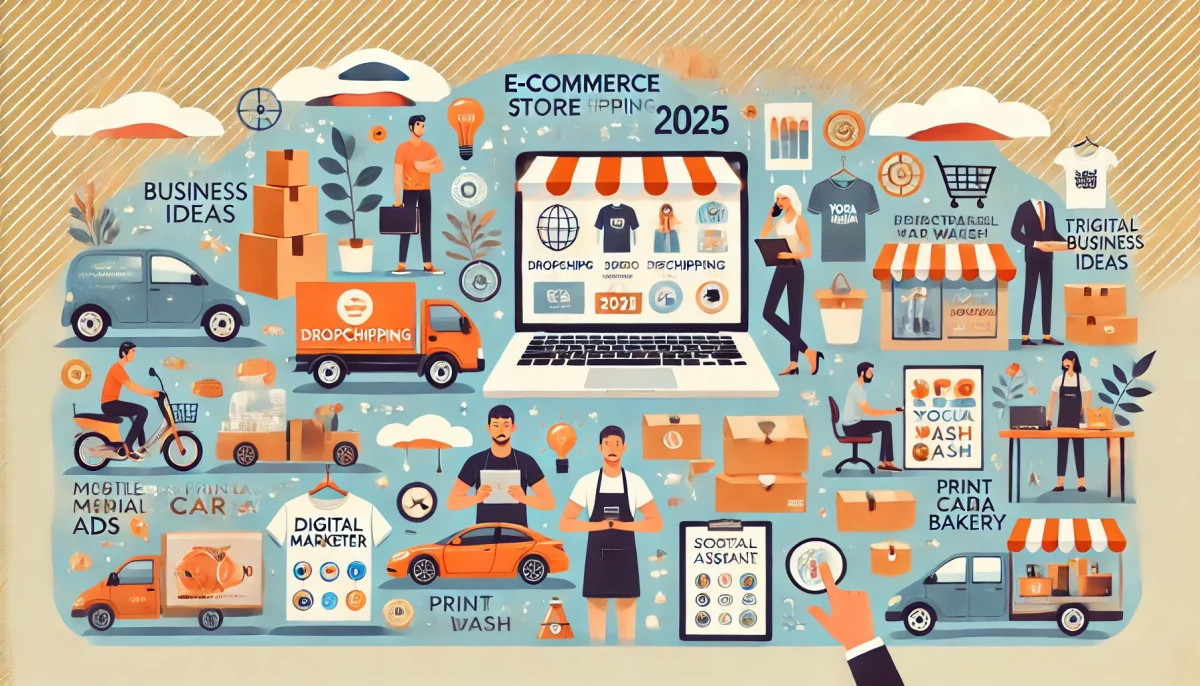
Profitable Opportunities for 2025

🔥 Top Business Ideas for 2025

1. E-Commerce Business

With the rise of online shopping, starting an e-commerce store is one of the most profitable business ideas today. You can sell fashion, electronics, home décor, or handmade products through platforms like Shopify, Amazon, and Etsy.
Key Benefits:

  • Low operational costs
  • Global customer reach
  • Potential for passive income

2. Dropshipping Business

Dropshipping allows you to sell products without holding inventory. Your supplier directly ships products to customers, reducing your risk and overhead.
Why It’s Profitable:

  • No need for storage space
  • Minimal investment required
  • Easy to scale globally

3. Digital Marketing Services

Every business today needs digital visibility. Offering services like SEO, social media marketing, PPC advertising, and content marketing can be highly rewarding.
How to Succeed:

  • Build expertise in digital tools
  • Create a strong portfolio
  • Use social media to attract clients

4. Freelance Services

If you’re skilled in writing, graphic design, programming, or consulting, freelancing is a great option. Platforms like Fiverr, Upwork, and Freelancer connect you with global clients.
Popular Niches:

  • Content writing
  • Web development
  • Online tutoring

5. Subscription Box Service

Subscription boxes are gaining popularity. Create a niche box for beauty products, fitness gear, snacks, or books.
Steps to Start:

  • Choose a niche
  • Source quality products
  • Offer flexible subscription plans

6. Affiliate Marketing

Earn commissions by promoting products through your blog, YouTube channel, or social media pages.
Top Affiliate Platforms:

  • Amazon Associates
  • ClickBank
  • ShareASale

7. Online Course Creation

Have expertise in a subject? Sell courses on platforms like Udemy, Teachable, and Coursera.
Why It’s Profitable:

  • Low investment
  • High scalability
  • Passive income potential

8. Print-on-Demand Business

Sell custom-designed products like t-shirts, mugs, or phone cases without inventory.
Why It’s Trending:

  • No upfront stock needed
  • High-profit margins
  • Easy integration with e-commerce platforms

9. Virtual Assistant Services

Help entrepreneurs and small businesses manage tasks like email, scheduling, or customer support.
Getting Started:

  • Build communication & time management skills
  • Register on Fiverr or Upwork
  • Build long-term client relationships

10. Fitness & Wellness Coaching

Start a business in personal training, yoga, or diet coaching — either online or offline.
Business Opportunities:

  • Online fitness sessions
  • Meal planning services
  • Virtual wellness workshops

11. Mobile Car Wash & Detailing

A mobile car cleaning service offers convenience to customers at home or office.
Why It’s a Good Idea:

  • Low startup cost
  • Steady income from repeat clients
  • High scalability

12. Pet Care Business

Pet owners need grooming, boarding, and organic food services.
Best Services to Offer:

  • Mobile grooming
  • Pet daycare
  • Homemade pet food

13. Sustainable & Eco-Friendly Products

Start a business selling eco-friendly products like reusable bags, bamboo items, or organic skincare.
Why It’s Profitable:

  • Rising eco-conscious consumers
  • Government support
  • Great for brand image

14. Social Media Consulting

Help businesses build their social media presence and run effective ad campaigns.
Services You Can Offer:

  • Content strategy
  • Influencer marketing
  • Social media ads

15. Home-Based Bakery

If you love baking, start a custom cake or pastry business from home.
How to Start:

  • Get required licenses
  • Promote on Instagram/Facebook
  • Offer online ordering & delivery

How to Choose the Right Business Idea?

  • Assess Market Demand – Use tools like Google Trends, Statista, and industry insights
  • Start Small – Test your business idea with low investment
  • Focus on Digital Marketing – Use SEO, content, and ads to acquire customers
  • Build a Unique Brand Identity – Stand out with your value proposition

🚀 Ready to Start Your Entrepreneurial Journey in 2025?

Book Now – Free Business Consulting

Categories
Angel Investor business News

Samir Arora says Trump’s measures will avert financial collapse ?

Samir Arora Says Trump’s Economic Moves a “Much-Needed Course Correction” Amid Financial Concerns

New Delhi, March 18, 2025:
Samir Arora, founder and fund manager of Helios Capital, on Sunday remarked that US President Donald Trump is executing a “much-needed course correction” in the face of what he termed an inevitable financial reckoning for the United States.

Speaking on the current economic landscape, Arora acknowledged that Trump’s policies may cause some short- to mid-term discomfort. However, he emphasized that such tough measures are essential to ensure long-term financial stability for the country.

“President Trump’s actions may appear aggressive or painful in the immediate term, but they are necessary steps to steer the US economy away from unsustainable fiscal paths,” Arora said.

While he did not delve into specific policies, Arora hinted at growing fiscal imbalances and rising debt levels in the US economy, suggesting that corrective economic interventions are timely and vital.

He also pointed out that economic reforms often come with resistance, but history shows that bold policy decisions are what eventually safeguard the financial health of nations.

This perspective comes at a time when global investors are closely monitoring US fiscal and monetary strategies, inflation trends, and interest rate projections — all of which have a deep impact on global markets.

Arora’s remarks are likely to resonate with market observers who have expressed concerns over mounting US debt and the sustainability of government spending in recent years.


For more please subscribe – News.badabusiness.com


Categories
business business loan Business motivation Business Startup Ideas msme loan Private Equity Funding Process & Business Expansion Sales Small Business Consulting Firms Startup

What is Sales in Business? | Sales Ka Matlab Aur Importance

Sales means selling a product or service to a customer in exchange for money. When a company or an individual offers their product or service to a customer and receives money in return, it is called Sales.

➕ Simple Formula:

Sales = Product/Service + Buyer + Exchange of Money


Why is Sales Important?

  • 💰 Main source of income for any business
  • 📈 Helps in profit growth
  • 👥 Expands customer base and market reach
  • 🔄 Maintains healthy cash flow
  • 📊 Best indicator of business performance

Types of Sales

  1. Direct Sales:
    When a company or salesperson sells a product directly to the customer.
    Examples: Door-to-door sales, In-store sales, Personal selling.
  2. Indirect Sales:
    Sales through dealers, distributors, agents, or third-party platforms.
    Examples: Retailers, Franchise outlets.
  3. Online Sales:
    One of the fastest-growing sales models today via e-commerce platforms like Amazon, Flipkart, company websites, or social media channels.
  4. B2B Sales (Business to Business):
    When a business sells its product or service to another business.
  5. B2C Sales (Business to Customer):
    When a business sells directly to the end customer.

Difference Between Sales and Marketing

Marketing Sales
Attracts potential customers Converts customers into buyers
Focuses on awareness and branding Focuses on revenue and conversions
Long-term strategy Short-term, target-based strategy

👉 Marketing brings the customer in; Sales closes the deal.


How to Improve Sales – Effective Techniques

✅ Understand customer needs
✅ Build strong relationships
✅ Have deep product knowledge
✅ Practice effective communication skills
✅ Use CRM (Customer Relationship Management) tools
✅ Apply a proper Sales Funnel Strategy


How to Build a Career in Sales?

Today, there is a high demand for roles such as Sales Executives, Business Development Managers, Digital Sales Experts, etc. If you have strong communication skills, sales can be a high-growth career path.

Skills Needed for a Sales Career:

  • Communication
  • Negotiation
  • Customer Handling
  • CRM Software Knowledge
  • Follow-up Techniques

Conclusion:

Sales is the heart of any business. No business can survive without it. Whether you’re running a small shop or a large company, having strong sales skills is essential. With the right strategy and understanding of your customers, you can boost your sales multiple times and drive your business toward success.

For More – News.BadaBusiness.com

Categories
Business Courses Business motivation Sales Startup

How to Increase Sales: Proven Strategies to Boost Your Business

How to Increase Sales: Proven Strategies to Boost Your Business


Increasing sales is the ultimate goal for any business. Whether you’re a small business owner or managing a large enterprise, understanding the right sales strategies can help you maximize revenue. In this article, we’ll explore actionable techniques to increase sales, improve customer engagement, and enhance your business growth.


  1. Understand Your Target Audience


Knowing your audience is the foundation of successful sales. Conduct market research to identify their needs, pain points, and buying behavior. Use tools like Google Analytics, customer surveys, and social media insights to gather data.


Tips to Understand Your Audience:

Create buyer personas to tailor your marketing efforts.

Analyze customer feedback to improve your offerings.

Monitor industry trends to stay ahead of competitors.


  1. Improve Your Sales Funnel


A well-optimized sales funnel ensures potential customers move smoothly from awareness to purchase. Focus on each stage of the funnel:

Awareness: Use SEO, social media, and content marketing to attract prospects.

Consideration: Provide valuable information through blog posts, videos, and case studies.

Decision: Offer discounts, testimonials, and guarantees to encourage conversions.


  1. Leverage Digital Marketing


In today’s digital era, online marketing is crucial for increasing sales. Implement these strategies:


SEO Optimization:

Use relevant keywords in website content, meta descriptions, and blog posts.

Optimize site speed and mobile-friendliness for better rankings.

Create high-quality, informative content that answers customer queries.


Social Media Marketing:

Engage with customers on platforms like Facebook, Instagram, and LinkedIn.

Run targeted ads to reach potential buyers.

Use influencer marketing to build trust and credibility.

Email Marketing:

Personalize emails based on customer behavior.

Offer exclusive deals and promotions to your subscribers.

Automate follow-ups to nurture leads.

  • Offer Competitive Pricing & Discounts


Pricing plays a major role in purchasing decisions. Competitive pricing and occasional discounts can attract more buyers.


Best Practices:

Conduct competitor analysis to set the right price.

Offer time-limited discounts to create urgency.

Implement bundle deals and loyalty programs.


  1. Enhance Customer Experience

A positive customer experience leads to repeat purchases and referrals. Focus on:

Excellent Customer Service: Provide quick responses and personalized support.

User-Friendly Website: Ensure easy navigation and a seamless checkout process.


After-Sales Support: Follow up with customers and resolve their concerns.

  • Leverage Upselling and Cross-Selling


Encourage customers to buy more by recommending related products or premium versions.


Upselling: Offer an upgraded version of the product they’re purchasing.

Cross-Selling: Suggest complementary products to increase the cart value.


  1. Run Paid Advertising Campaigns


Paid ads can drive instant traffic and sales. Platforms like Google Ads and Facebook Ads allow businesses to target specific audiences.


Advertising Tips:


Use compelling ad copies and high-quality visuals.


Set a clear call-to-action (CTA).

A/B test different ad creatives for better performance.

  • Build Strong Customer Relationships

Loyal customers are more likely to make repeat purchases and refer your business to others.


How to Build Loyalty:

Provide personalized offers based on past purchases.

Engage with customers through social media and emails.

Create a referral program to reward loyal customers.


Conclusion


Increasing sales requires a mix of smart marketing, customer engagement, and continuous optimization. By understanding your audience, leveraging digital marketing, and enhancing the customer experience, you can drive more sales and grow your business.

Categories
Sales

Inventory Turnover Ratio 101: What It Is and How to Improve It

Effective inventory management has always been a key factor in business success. Whether you’re a small retailer or a large-scale manufacturer, how well you manage your inventory impacts your bottom line. One crucial metric to measure your inventory’s health is the inventory turnover ratio. Which shows how efficiently a company is selling and replenishing its inventory. It helps businesses balance having too much or too little stock.

What Is the Inventory Turnover Ratio?

The inventory turnover ratio is a simple but powerful indicator. It helps companies understand how often they sell through their stock within a specific period. But why is this ratio so important? Let’s delve deeper into what the inventory turnover ratio is and why it matters to business performance.

How Inventory Turnover Ratio Works

At its core, the inventory turnover ratio measures how frequently a business sells its entire inventory during a particular time frame, typically a year. A high inventory turnover ratio means that products are moving quickly off the shelves, signaling good sales performance and efficient inventory management. On the other hand, a low turnover ratio can be a warning sign of overstocking or weak demand.

For instance, imagine a clothing retailer. If they have a high turnover ratio, it indicates that they are regularly selling out their stock and constantly replenishing it. This not only reduces the risk of stock becoming obsolete but also ensures fresher products on the shelves. In contrast, a low turnover ratio could mean that products are gathering dust in the warehouse, tying up valuable capital. The frequency of this cycle of selling and replacing inventory directly influences business cash flow and profitability.

The formula for Calculating Inventory Turnover Ratio

The formula for calculating the inventory turnover ratio is straightforward:
Inventory Turnover = Cost of Goods Sold (COGS) ÷ Average Inventory

  • Cost of Goods Sold (COGS): This represents the direct costs attributable to producing the goods that were sold during the period.
  • Average Inventory: This is the average value of inventory on hand during a specific period and is calculated as (Beginning Inventory + Ending Inventory) ÷ 2.

Let’s take an example. Suppose a company has a cost of good sales (COGS) of $500,000 and an average inventory of $100,000. The inventory turnover ratio would be:
Inventory Turnover = $500,000 ÷ $100,000 = 5

This means that the company sold and replenished its inventory five times during the period. A higher ratio typically suggests strong sales and effective inventory management, while a lower ratio may indicate excess stock or slow-moving products.

Importance of Inventory Turnover Ratio

Understanding your inventory turnover ratio can give you a competitive edge. It’s a crucial metric that influences various aspects of your business, from cash flow to customer satisfaction. A high turnover ratio ensures that you’re not tying up capital in unsold goods and reduces the risk of obsolescence. Additionally, faster inventory movement allows for more up-to-date stock, which can lead to happier customers.

Different industries have different benchmarks for an ideal turnover ratio. For example, grocery stores with perishable goods often have higher ratios compared to luxury retailers selling high-end, low-demand products. Businesses need to understand their industry standards and adjust their strategies accordingly.

Strategies to Improve Your Inventory Turnover Ratio

If your ratio is low, several strategies can help improve it:

  1. Demand Forecasting: More accurate predictions of customer demand can prevent over-purchasing or under-purchasing.
  2. Supplier Relationships: Build better relationships with suppliers to allow flexible, timely restocking.
  3. Inventory Management Tools: Use technology solutions to track inventory in real-time and make data-driven decisions.
  4. Promotions: Implement discounts or bundles to move excess inventory and improve your turnover ratio.

Limitations of Inventory Turnover Ratio

While the inventory turnover ratio is an essential metric, it’s not without its limitations. External factors, such as seasonal trends or supply chain disruptions, can skew the ratio. For example, a retailer might experience a spike in sales during the holiday season, artificially inflating their turnover ratio. Additionally, a high turnover ratio isn’t always a positive sign. If inventory levels are too low, it could lead to stockouts and lost sales, which might frustrate customers.

It’s crucial to interpret this ratio alongside other financial metrics, such as profit margins and liquidity ratios, to get a more comprehensive picture of your business’s overall performance.

Conclusion:

The inventory turnover ratio is a powerful tool for any business that deals with physical products. It offers a clear picture of how effectively you’re managing your stock, which in turn affects your profitability, cash flow, and customer satisfaction. By understanding this ratio and implementing strategies to improve it, you can optimise your inventory management and ensure that your business operates smoothly and efficiently.


Idea to IPO by Bada Business